
Description
Buy P21 10mg Online: Complete SEO Guide
Searching for “buy P21 10mg online,” “P21 peptide,” “P021 10mg,” “P21 research peptide,” or “CNTF-derived peptide” reflects interest in this synthetic neurogenic research compound. This guide explains what P21 is, clarifies the 10mg research format, covers legal status, quality considerations, costs, and important safety notes.
Critical disclaimer: P21 (also known as P021) is sold strictly for laboratory research and development purposes only. It is not approved by the FDA or other major regulatory agencies as a drug, dietary supplement, or therapeutic agent for human use. Research-grade P21 is not intended for human or animal consumption, injection, or any therapeutic application. There are no completed human clinical trials establishing safety or efficacy. This article is for informational and educational purposes only and does not constitute medical advice. Always consult qualified professionals and comply with applicable laws when handling research chemicals.
What Is P21?
P21 (P021) is a synthetic adamantane-modified tetrapeptide designed as a mimetic of a biologically active fragment of ciliary neurotrophic factor (CNTF). CNTF is a neurotrophic protein that supports neuronal survival and neurogenesis, but the full-length protein is large and does not readily cross the blood-brain barrier when administered peripherally.
Researchers engineered P21 by isolating a short active sequence from CNTF and adding an adamantane group to improve metabolic stability and brain penetrance. Common molecular details listed for research material include:
- Sequence: Ac-Asp-Gly-Gly-Leu (with C-terminal adamantane modification; often written Ac-DGGL(A)G-NH₂ or similar)
- Molecular weight: approximately 578–579 g/mol
- CAS number: 1246751-68-7
- Form: White to off-white lyophilized powder
In preclinical studies, P21 has been investigated for its ability to influence BDNF signaling, hippocampal neurogenesis, and related pathways in animal models of aging and neurodegeneration. The evidence base remains preclinical; independent human data are lacking.
The 10mg Research Vial Format
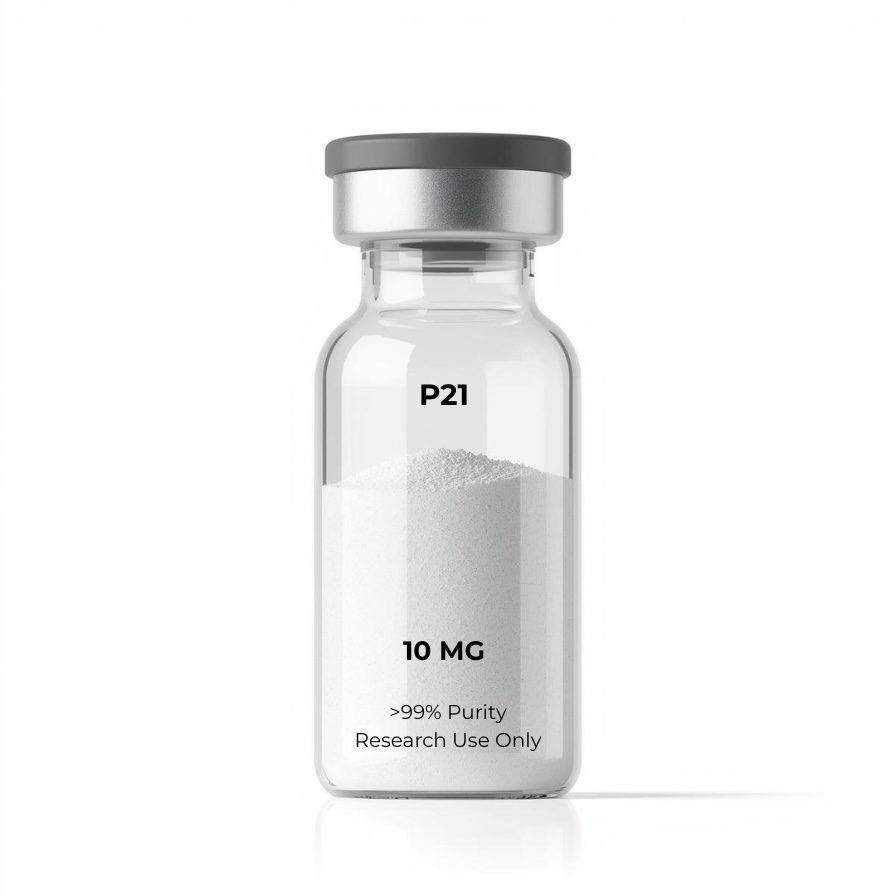
The 10mg lyophilized vial is the standard size offered by most research peptide suppliers. The powder requires reconstitution with bacteriostatic water or another suitable solvent before laboratory use.
Reputable suppliers typically emphasize:
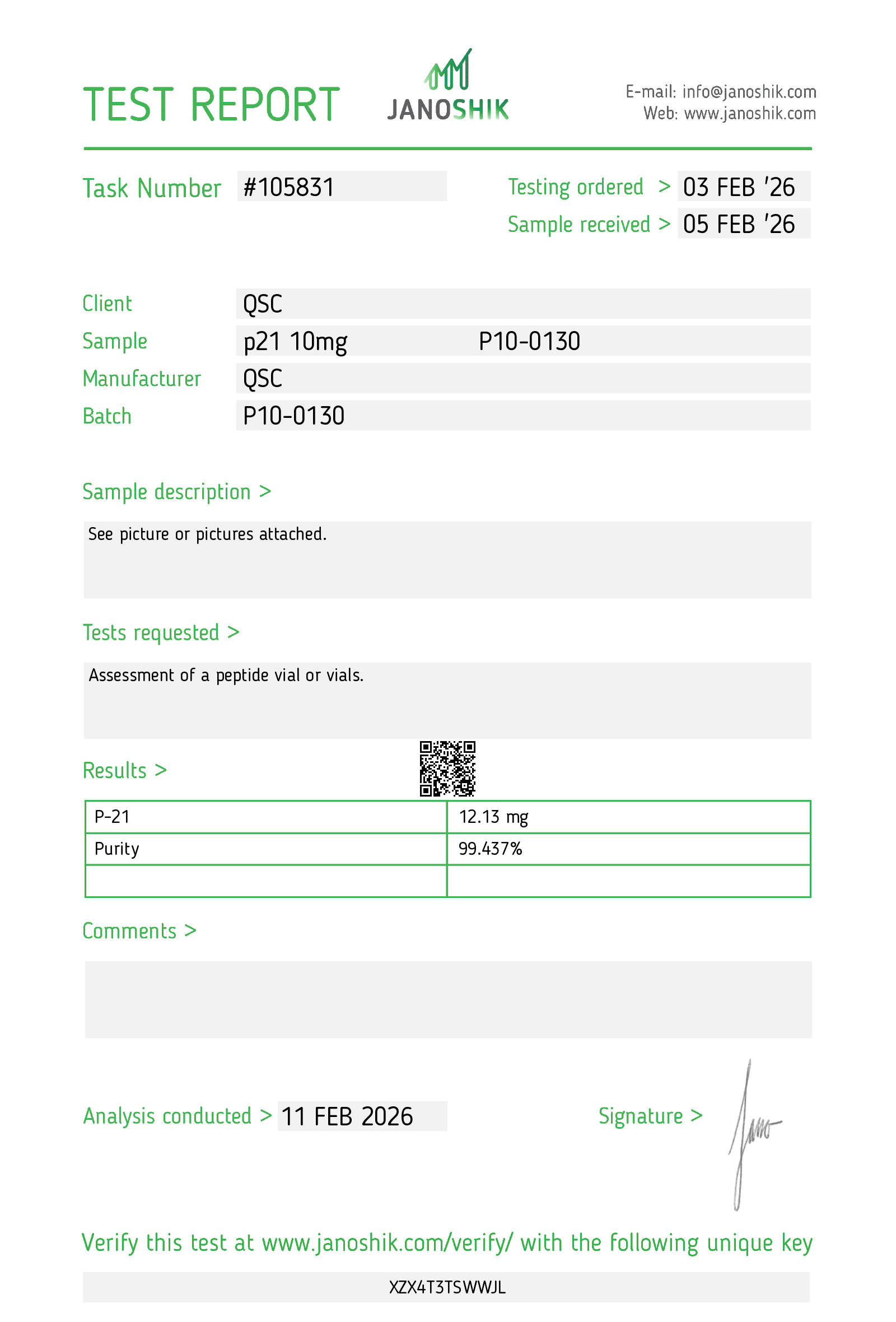
- Purity of ≥98–99% verified by HPLC (often with mass spectrometry confirmation)
- Third-party Certificates of Analysis (COA)
- Storage guidance (usually cool, dry conditions or –20°C for long-term stability of the sealed vial)
The 10mg quantity suits multi-dose experimental protocols or laboratories requiring moderate amounts of material.
Legal and Regulatory Status
P21 is not FDA-approved for any medical indication. It is marketed and sold exclusively as a research chemical labeled “for research use only” or “not for human consumption.”
It does not have an established pathway for compounding as a prescription drug in major Western regulatory systems, and there are no approved pharmaceutical products containing P21. Purchasing research-labeled material for personal human use falls outside regulated channels and carries quality, purity, sterility, and legal risks.
How Researchers Source P21 10mg Online
When evaluating research suppliers, prioritize:
- Independent third-party testing with accessible, lot-specific COAs
- Clear research-only disclaimers on product pages and labeling
- Transparent information on sequence, molecular weight, purity, and handling
- Secure payment and shipping practices
Avoid sources that make therapeutic or human-use claims or lack verifiable testing documentation.
Cost of P21 10mg
Research-grade 10mg vials commonly range from approximately $90–$150+ depending on the supplier, claimed purity, testing documentation, and bulk discounts. Prices vary and should be verified directly with current vendors. Multi-vial purchases often reduce the per-vial cost.
Research Context, Handling, and Quality Notes
Preclinical research (primarily from rodent models) has explored P21 in the context of hippocampal neurogenesis, BDNF upregulation, reduction of certain tau-related pathology markers, and cognitive performance in aging or Alzheimer’s-model animals. These findings remain limited to non-human studies.
Laboratory handling best practices include:
- Reconstituting under conditions appropriate for the experimental design
- Following supplier storage recommendations for lyophilized and reconstituted material
- Using proper sterile technique and personal protective equipment
- Maintaining accurate records of lot numbers and COAs
As with all research chemicals, sterility, accurate measurement, and contamination control are essential for reproducible results.
Conclusion and Recommendations
P21 10mg is a research-grade synthetic CNTF-derived peptide studied in preclinical models for potential effects on neurogenesis and related pathways. It is available from specialized research suppliers in lyophilized 10mg vials labeled strictly for laboratory use only.
If your purpose is legitimate scientific investigation, select suppliers that provide independent third-party COAs and clear documentation. P21 is not an approved treatment, nootropic, or therapeutic agent, and human clinical evidence is absent.
For any concerns related to cognitive function, neurological health, or related areas, consult a qualified healthcare provider and rely on evidence-based medical approaches. Research chemicals labeled for laboratory use only should remain in controlled research settings.
Review current supplier testing data, storage requirements, and applicable regulations carefully. Prioritizing scientific integrity, safety, and legal compliance is the most responsible approach when working with research peptides such as P21.

Reviews
There are no reviews yet.